What does it mean to have a hardware CEO?
Apple hasn't had a hardware CEO since Steve Jobs. What changes at the company when the CEO comes from the machines division? Three areas where a technical CEO typically shifts the equilibrium: custom silicon, new product categories, and supplier policy.
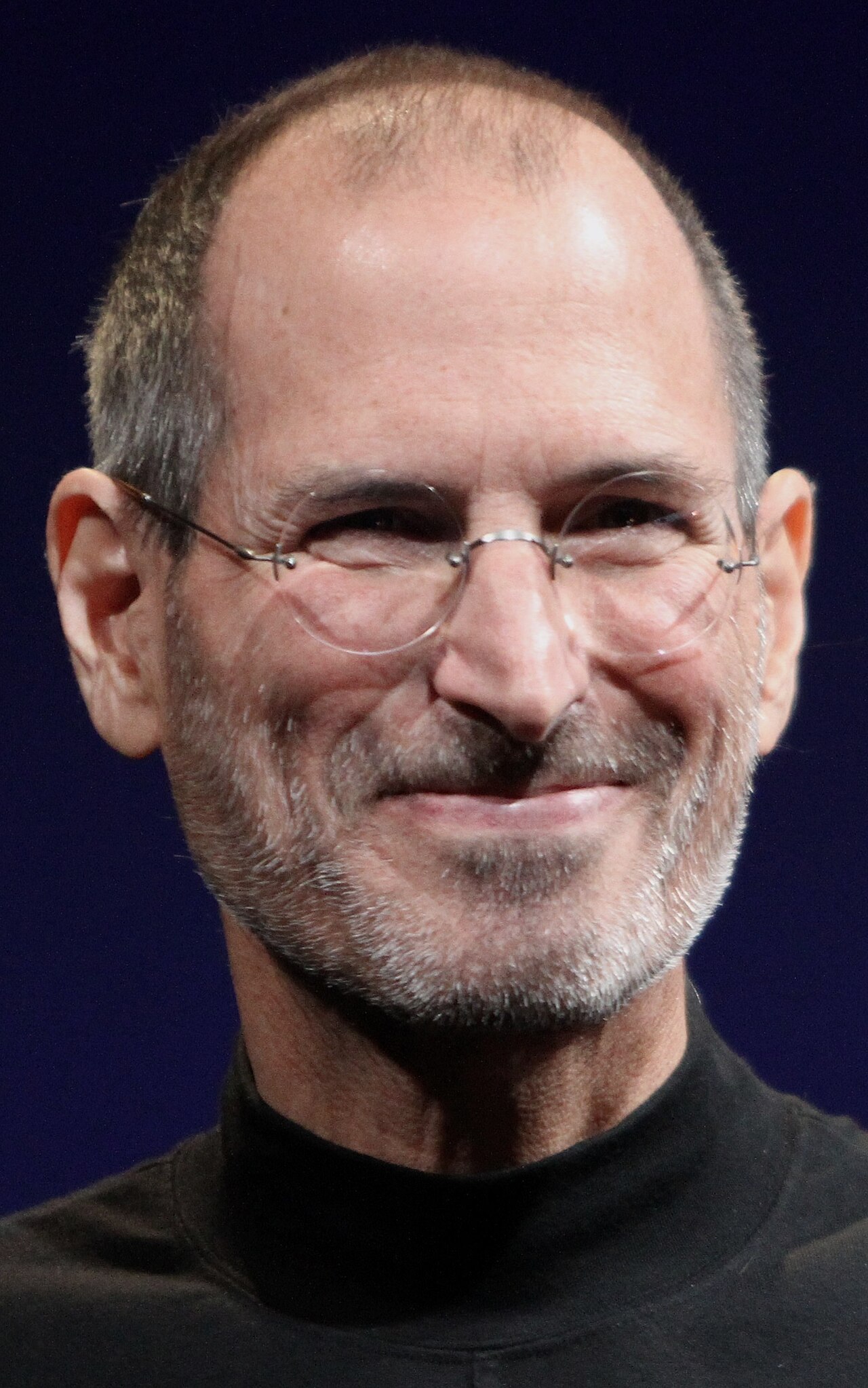
Steve Jobs was a CEO who understood hardware. Tim Cook was a CEO who came from operations — he optimized the supply chain hardware demands, but his primary competence was not product engineering. John Ternus is a CEO who comes from hardware. That’s a larger transition than the April 20 announcement suggests.
The difference in the room
At a company with an operational CEO, hardware decisions pass through financial and logistics filters before reaching the final decision. A chip that costs 12 % more to manufacture but delivers 18 % more performance needs to justify itself against other capital allocations. A new sensor that adds $2.40 to BoM needs to demonstrate ROI through final price or retention impact.
At a company with a hardware CEO, the same trade-off is evaluated by someone who can read the waferplot. The filters don’t disappear — Tim Cook isn’t disappearing into the boardroom — but the equilibrium point shifts. Marginal hardware decisions tend to win more investment. Marginal operations decisions tend to win less. It’s a rotation of emphasis, not a revolution.
Apple under Ternus continues to be the Apple under the same board that picked Cook in 2011. The Wall Street incentive structure continues to demand operating margin. But within the $30 billion annual R&D budget, the relative allocation between hardware and operations shifts. That’s what matters.
Where this shows up first
Three areas where a technical CEO typically changes a company’s velocity:
1. Multi-year custom-silicon bets
Apple is already betting — Apple Silicon is the bet. But the next frontiers (modems, Wi-Fi baseband, neural compute, server-discrete GPUs) are at various stages of execution. A CEO who understands what TSMC can and can’t do at the next node will make different timing calls.
Specifically:
- Apple-proprietary modems. Apple began this project in 2019 after acquiring Intel’s modem division. Public results came in 2025–26. Under Ternus, the timeline for full internalization — replacing Qualcomm in every iPhone — could accelerate.
- Wi-Fi and Bluetooth baseband — another critical supplier (Broadcom) Apple is internalizing. Public timeline still murky.
- Neural compute / on-device AI inference. The Apple Neural Engine has evolved with each M generation, but the frontier of large-model on-device inference is still ongoing.
Those decisions are particularly sensitive to a technical CEO because they involve billions in capex with TSMC suppliers and delayed return. Financial CEOs tend to be cautious about them; technical CEOs tend to be conviction bettors.
2. Adjacent product frontiers
Vision Pro launched under the Cook era. The next new category — possibly health, possibly consumer robotics, possibly lighter AR glasses — will launch under Ternus. New categories are 80 % hardware-bound early (the software side matures later, with the developer ecosystem).
Cook was cautious by operational inclination. Ternus may be cautious by technical inclination, which is a different cautiousness — more decisive once decided, slower to commit but faster to scale. The difference isn’t “more or less cautious” — it’s “which phase deserves the caution.”
Apple under Cook launched Apple Watch (2015), AirPods (2016), HomePod (2017, modest success), and Vision Pro (2024) — four new categories in thirteen years. Apple under Jobs launched iPod (2001), iPhone (2007), iPad (2010) — three categories in nine years. Expecting Jobs’s cadence from Ternus would be unrealistic; but expecting Cook’s cadence is more than reasonable, perhaps slightly accelerated.
3. Supplier policy
Apple spends tens of billions on component suppliers annually: TSMC, Samsung Display, Sony, Foxconn, LG, Pegatron, Goertek, Cirrus Logic, Synaptics, dozens more. When the CEO can read a datasheet, the conversation between Apple and these suppliers has different dynamics.
Not necessarily cheaper for Apple — possibly more expensive, because more-specific technical demands cost more. But more aligned to product roadmap, with fewer translation layers between Apple’s engineering and the supplier’s engineering.
This shows up first in long-term contract renegotiations. Each of those contracts comes with performance and cadence clauses. When Apple sits down to renegotiate a Samsung Display contract in 2027, the Apple side will be led by someone who specifically knows what they’re asking for. That’s the kind of change that shows up in earnings reports three years later.
What probably doesn’t change
- Financial cadence. Cook delivered — annual revenue at $400 billion+, operating margin 30 %+, aggressive buybacks. There’s no structural reason to change quarterly cadence or buybacks.
- Industrial design pipeline. Jony Ive left years ago. Ternus inherits the current team.
- Public posture. Apple won’t become a roadmap-loquacious company. Ternus, like Cook, speaks rarely in public outside official events. Continuity of communication reduces market-cap volatility.
- Consumer privacy focus. It’s a brand pillar, not a technical differentiator. Continues.
- App Store strategy. Global regulatory policy is the domain Cook continues presiding over as Executive Chairman.
The long read
Apple under Cook became a company that learned to make money with the world’s best operational execution. Apple under Ternus may become a company that learns to make hardware no one else can. These aren’t opposed goals, but the emphasis shifts.
The question isn’t “will Ternus be better than Cook?” — Cook delivered roughly $30 trillion in cumulative market cap, the most successful CEO in modern corporate history. The question is “what kind of company does Apple become in the next decade?”
Picking Ternus signals the board wants the hardware-first version.
Practical implications for investors
For anyone allocated to AAPL:
- Hardware capex will rise marginally. Chip and optics R&D in particular.
- Operating margin may compress slightly during product transitions, but this is normal. Cook did the same with the Intel → Apple Silicon transition (~150 bps of temporary compression in 2020–21, recovered by 2023).
- Positive revenue surprises may come from new categories before they come from iPhone. Vision Pro v2/v3, possibly lighter AR glasses, possibly a health product with proprietary hardware (not Apple Watch — something new).
- Stock buybacks continue at similar cadence.
For the industry: Apple just signaled that hardware is the future, not software. That will influence Microsoft, Google, Meta — companies still deciding whether to internalize silicon at scale. Apple is the market signal.
See also
- Why Ternus, not Federighi? — the companion essay.
- M-series (Apple Silicon) — the structural argument.
- Succession — context for the announcement.
- Biography — the engineer becoming CEO.