Why Ternus, not Federighi?
Federighi was the analysts' pick to succeed Tim Cook as Apple's CEO. The internal logic tells a different story — and it's about hardware execution during the Apple Silicon transition.
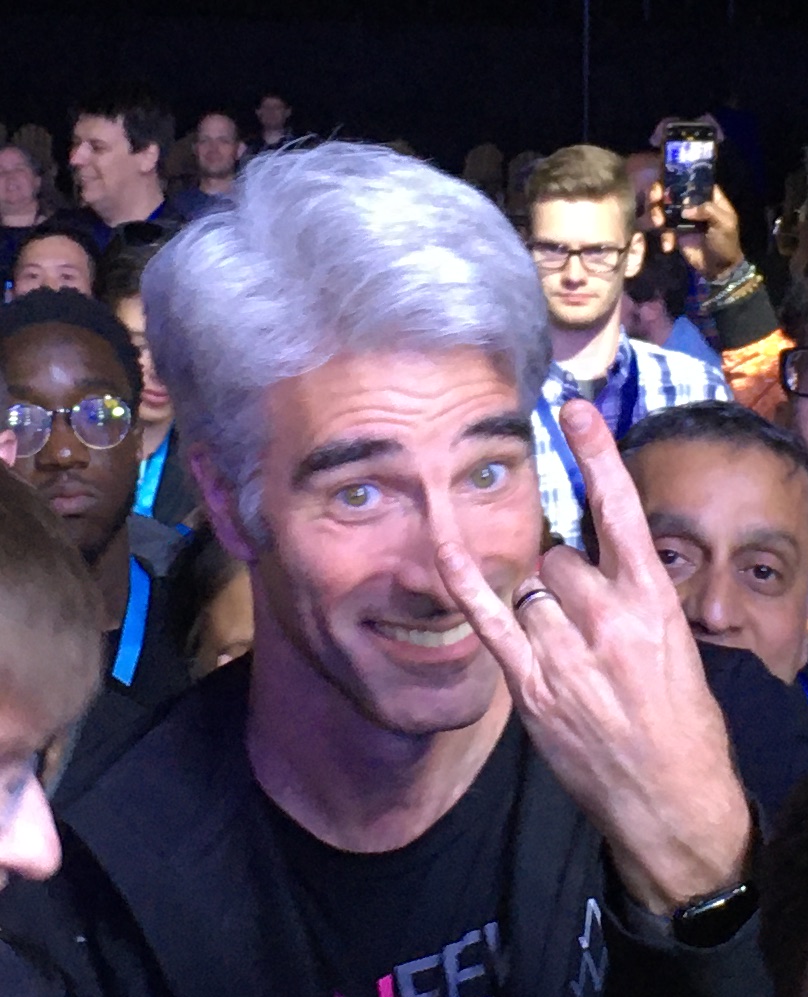
When John Ternus’s name came out as Tim Cook’s successor on the morning of April 20, 2026, parts of the tech press were surprised. Not because Ternus was unknown — he had been presenting at WWDC since 2018 — but because the analyst consensus had been Craig Federighi, current SVP of Software Engineering.
The reasoning was sensible. Federighi has more stage time. He has more sympathy points. He has the hair. He has software, which has been the industry’s narrative future since 2010 — everyone knows “software is eating the world.” But Apple did not pick for the stage.
This essay is about why.
The metric that mattered
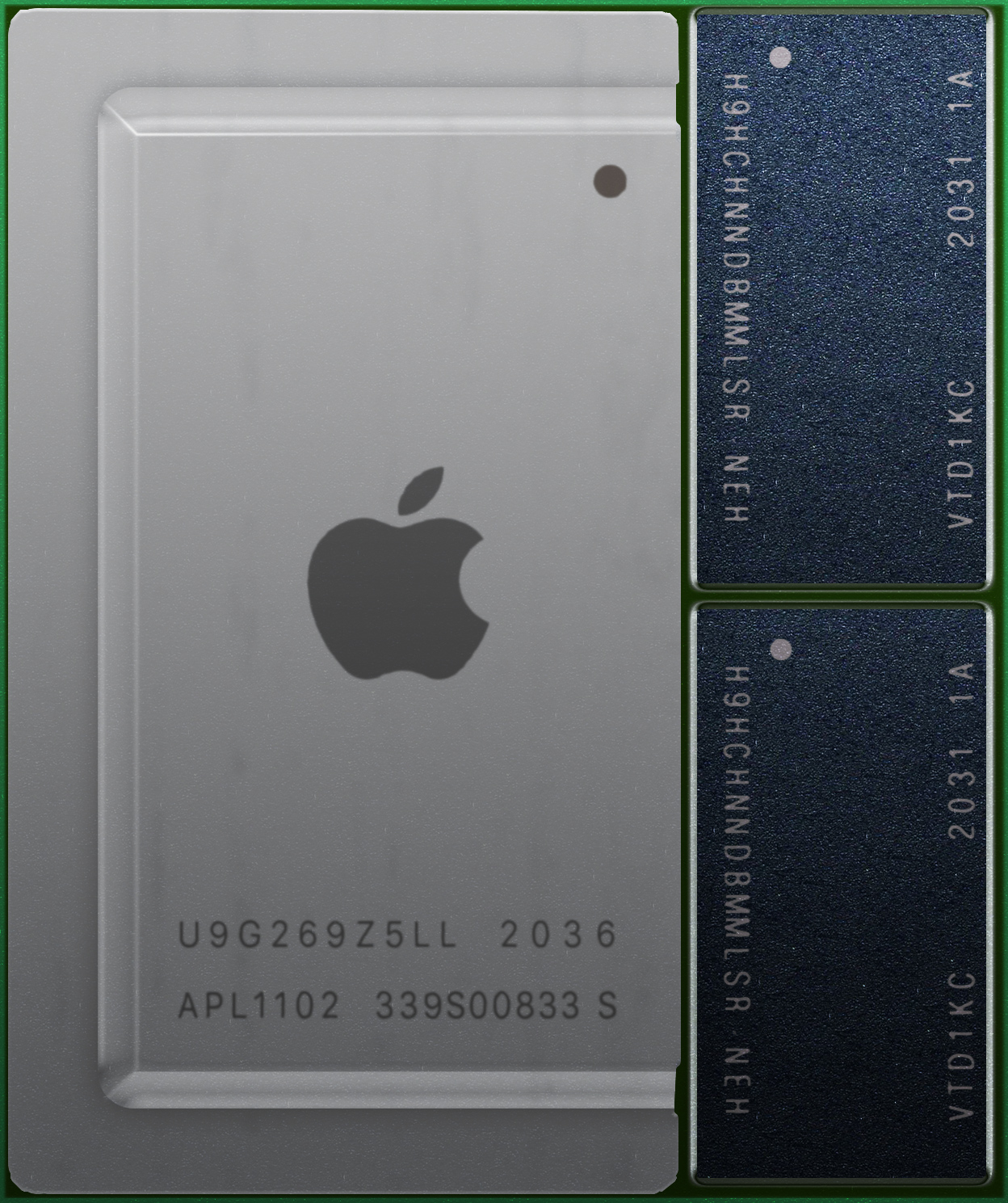
Between 2020 and 2026, Ternus ran the division that mattered most to Apple in that period: hardware. And the most important part of hardware in that period was Apple Silicon.
The numbers:
- 5 M-series generations in 5 years (M1 → M5).
- 3 product tiers (base / Pro / Max / Ultra) shipping concurrently since M1 Pro/Max in October 2021.
- 0 significant public delays in the annual cadence.
- 0 SKUs with under-spec performance post-launch.
- 0 recalls of any M-series chip.
Compare it to any equivalent transition — Intel to 14nm, AMD Bulldozer to Zen, NVIDIA Turing to Ada Lovelace, IBM POWER to Tirius — and that cadence is hard to match. Apple compressed into five years what the industry typically takes eight to ten to do.
See the Apple Silicon page for the full generation calendar.
What this says about leadership
Software fails inward. A bug can be patched in a week, an iOS x.0.1 catches most defects. Hardware fails outward — a problem that ships goes to millions of units, and the cost of rework is the company’s quarter.
Running a hardware division at Apple Silicon’s cadence without a public miss for five consecutive years demonstrates a specific kind of talent: the ability to make irreversible decisions well. Every chip tape-out decision is irreversible. Every critical-supplier decision (TSMC, Samsung Display, Sony for sensors) is irreversible within an 18–24 month cycle. Every architectural decision is irreversible across generations.
That’s CEO talent. Not by accident.
Modern public-company CEOs spend ~20 % of their time on reversible decisions (quarterly strategy, hiring, communication) and ~80 % on irreversible or semi-irreversible ones (M&A, capex, positioning, long-term supply chain). Apple’s hardware division under Ternus was the division inside the company that made the most irreversible decisions well over the last half-decade. That track record is not easily substitutable.
And the stage?
Ternus presents. He has eight years of stage time — since the 2018 iPad Pro in Brooklyn — and a career peak in 2023 when he introduced Apple Vision Pro alone at WWDC. The gap with Federighi isn’t in magnetism — it’s in technical density.
When Ternus introduces a product, he explains how it works. When Federighi introduces a product, he explains what changes. Both are valid, but they serve different purposes. For the CEO of a company whose primary competence shifted from “making beautiful software” to “making chips better than TSMC can fabricate,” technical density matters more than magnetism.
There’s also a semiotic detail: the person Apple chose to introduce its next new category was Ternus. Vision Pro was the company’s most ambitious hardware bet in a decade. Apple put Ternus on stage to defend it alone. When a company does that, it’s publicly signaling who it considers the author of the product. In retrospect, it was an audition.
The simplest read
Apple picked Ternus because he runs the part of the company where execution is most expensive, and he executed it perfectly for half a decade. There is no simpler read. There is no more correct one.
The other candidates were all plausible. Federighi had the stage. Joswiak had the tenure. Williams had the operational inheritance. But plausible and perfect are different things.
Picking Ternus reflects a board decision that prioritizes continuity of hardware execution over continuity of public image or continuity of operations. It’s the bet that makes the most sense for a company in the middle of a multi-year silicon transition that needs to make equally long bets over the next two decades (proprietary modems, on-device AI, possibly quantum computing on a 10–15-year horizon).
What this means for everyone else
Federighi continues as SVP of Software Engineering. Joswiak continues marketing. The three people who would traditionally have considered themselves out-of-running for Apple CEO now have clarity. In a company with this many qualified executives, clarity is an asset.
For investors, the lesson is: Apple decides hardware-first, even when everyone in the market writes “Apple needs to pivot to services/AI/cloud” analyses. Apple will not pivot. It will double down.
For the chip industry: Apple’s CEO is now someone who can read a waferplot. Negotiations with TSMC for future nodes (N2, A16) just changed in nature.
See also
- M-series (Apple Silicon) — the structural argument behind the choice.
- Apple Vision Pro — the presentation that was a public audition.
- Succession — full context for the announcement and transition.
- What does it mean to have a hardware CEO? — analysis of what changes at Apple under Ternus.
- Biography — the full career arc.