Apple Watch (the Ternus era)
John Ternus took over Apple Watch hardware in December 2022. Under his direction: Apple Watch Series 8/9/10, Apple Watch Ultra (2022) and Ultra 2, and the S9 chip with integrated Neural Engine for gesture detection.
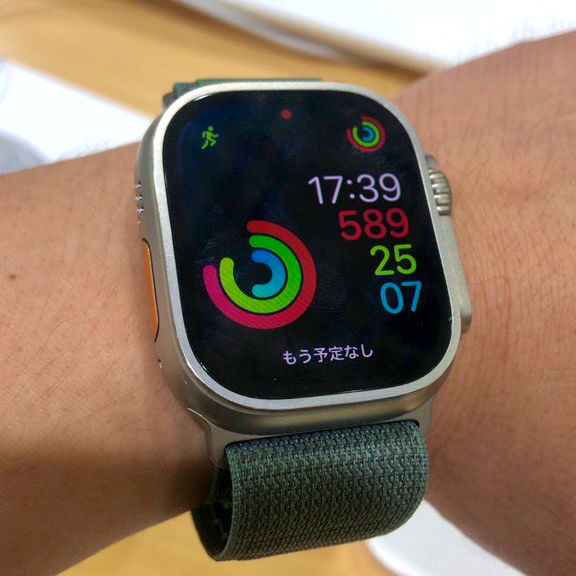
In December 2022, Apple Watch hardware moved under John Ternus’s reporting line. It was the last piece of the portfolio added to his Senior Vice President of Hardware Engineering division — completing the set: iPhone, iPad, Mac, Watch, AirPods, and (shortly after) Vision Pro.
Under Ternus, Apple Watch went through its largest portfolio expansion since its 2015 debut. This page catalogs that era.
The Apple Watch Ultra — first new Watch tier
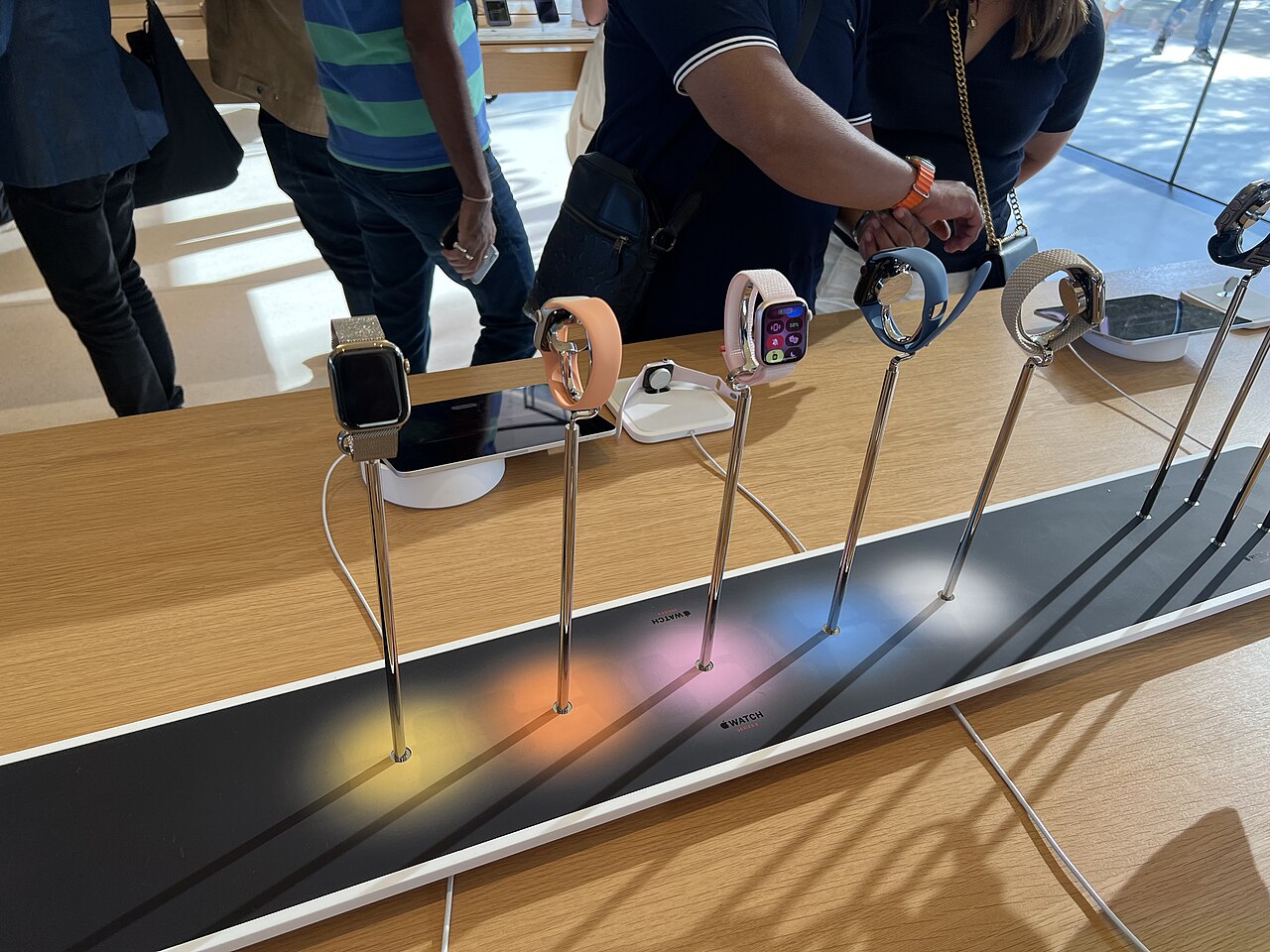
The Apple Watch Ultra debuted in September 2022, three months before Ternus took over the portfolio. But the Ultra’s continuing evolution ran entirely under him. The Ultra was the first tier expansion of Apple Watch — before, there were only sizes (38, 40, 41, 42, 44, 45 mm) and materials (aluminum, steel, ceramic). The Ultra created a third axis: extreme sport use.
Specs that justified the tier:
- Titanium chassis, 49 mm, single size.
- 3,000-nit Always-On display (twice the Series 8 of the time).
- Programmable action button.
- Water resistance to 100 m (vs 50 m on the Series).
- 36-hour battery (vs 18 on the Series).
- L1+L5 dual-frequency GPS, first on Watch.
- Microphone array for high-wind audio capture.
Positioning: triathletes, divers, climbers. Launch price: $799. Sales: well above initial forecasts. The Ultra created a new Apple Watch revenue segment without significantly cannibalizing the Series.
Apple Watch Series 9 — S9 chip with Neural Engine (2023)
In September 2023, the Apple Watch Series 9 debuted the Apple S9 chip, the first S-family chip to include a dedicated Neural Engine. Before S9, all on-watch ML processing depended on the paired iPhone. S9 brought on-device inference at scale enough for:
- Double-tap (finger-tap gesture) without iPhone cooperation.
- On-watch Siri voice recognition without internet.
- More precise fall detection.
- More responsive workout auto-tracking.
The migration of processing from iPhone-paired to Watch-on-device reflects the same architectural pattern that Apple Silicon followed on Mac: internalize the compute in the product rather than depending on a companion. Under Ternus, that philosophy became consistent across the entire hardware division.
Apple Watch Series 10 and the 2024 redesign
Series 10 (September 2024) brought the first chassis redesign of Apple Watch since 2018. Thinner, slightly larger display, new health sensors. Not a reinvention but a careful evolution — the kind of change a confident hardware division makes once a product is in steady state.
Series 10 also brought new health sensors that signaled future directions: SpO2 improvements, sleep apnea detection, and — for years rumored — glucose monitoring without a finger prick. Glucose monitoring hasn’t shipped as of 2026, but it’s one of the multi-year projects Ternus inherits as CEO.
Watch as a diversified portfolio
In 2022, Apple Watch was essentially a single product with size and material variations. In 2026, it’s three separate products:
| Tier | Positioning | Launch price |
|---|---|---|
| Apple Watch SE | Entry, no Pro features | $249 |
| Apple Watch Series | Mainstream, ECG, oximetry | $399 |
| Apple Watch Ultra | Sport extreme, titanium | $799 |
This diversification is the signature of a matured category. Apple Watch went from “experimental new device” (2015) to “iPad-style portfolio with tiers” (2026) under the combined direction of multiple divisions — but the hardware-tier decisions since 2022 are Ternus’s.
Health integration as a long-term bet
Under Ternus, Apple Watch has become the central platform of Apple’s health strategy. Each new generation added a sensor: ECG (2018), oximetry (2020), temperature (2022), apnea (2024). The next frontier (glucose, blood pressure) is still in R&D.
This health strategy — adding a sensor per generation — is hardware-heavy by design. It’s exactly the kind of multi-year bet an Apple under Ternus continues to make. See What does it mean to have a hardware CEO? for the structural analysis.
The Masimo controversy
Worth noting: in 2024, Apple was forced to remove the oximetry sensor from Apple Watches sold in the U.S. due to a patent dispute with Masimo. The hardware division under Ternus had to design a “neutered” Watch variant for the American market only. It was the first time an Apple product was partially scaled back by legal force — regulatory pressure that hardware CEOs tend to handle with more care than operational CEOs (because they understand redesign cost).
The Masimo dispute remains active in 2026 and will likely require direct CEO Ternus attention.
Specifications summary
- Series 10 (2024): S10 chip, 42 mm/46 mm, 3,000 nits, temperature sensor, apnea.
- Ultra 2 (2023): S9 chip, 49 mm titanium, 3,000 nits, GPS L1+L5, 36 h battery.
- SE (2024): S9 chip, 40 mm/44 mm aluminum, no ECG or oximetry.
See also
- Apple Vision Pro — the other “wearable” platform under Ternus.
- M-series (Apple Silicon) — the S-family is the mobile counterpart to the M-family.
- Ternus biography — the engineer who inherited Watch in 2022.
- Succession — health strategy as a multi-year priority.